Thank you for reading the Hiroshima University Email Newsletter. We’re excited to share the latest stories, research breakthroughs, and campus updates with you. |
|
|
1. President Ochi Holds a Meeting with H.E. Abdel Fattah El-Sisi, President of the Arab Republic of Egypt |
|
|
@Spokesman for the Egyptian Presidency |
|
|
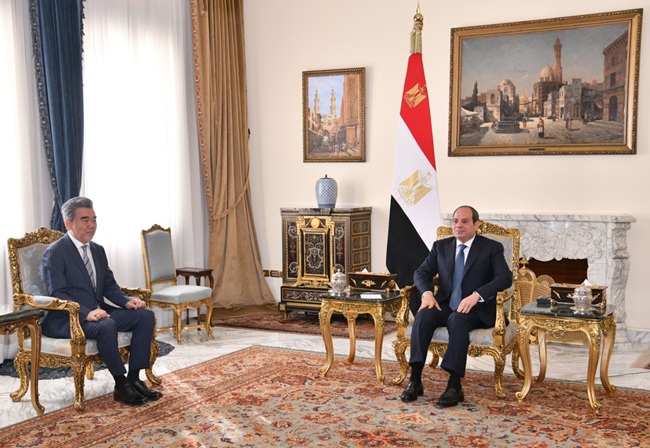
On April 29, 2026, President Mitsuo Ochi of Hiroshima University (HU) paid a courtesy call on H.E. Mr. Abdel Fattah el-Sisi, President of the Arab Republic of Egypt, during his stay in Cairo, and held a meeting with him. The meeting was attended by H.E. Mr. Fumio Iwai, Ambassador Extraordinary and Plenipotentiary of Japan to Egypt, Prime Minister Mostafa Madbouly, and Minister of Education and Technical Education Mohamed Abdel Latif.
President el-Sisi expressed his deep respect for the character and values of the Japanese people and his strong interest in learning from Japan’s approach to education and human resource development, which he considers to be the foundation of these qualities, with a view to incorporating them into Egypt.
During this visit to Egypt, HU, the Ministry of Education and Technical Education of the Arab Republic of Egypt, and SPRIX Inc. concluded a trilateral agreement on the implementation of a pilot program for Egyptian primary school teachers, as well as a trilateral agreement on educational cooperation for a financial literacy curriculum.
In addition, HU concluded an agreement on international educational cooperation with the Ministry of Higher Education and Scientific Research of the Arab Republic of Egypt and an agreement for the implementation of a Master’s Double Degree Program with Egypt-Japan University of Science and Technology (E-JUST).
HU will continue to strengthen its collaboration with Egyptian universities, government agencies, and companies, and actively promote further exchanges. |
|
|
2. The “Mega Exchange Program for Nurturing Peace and Sustainability Leaders,” jointly implemented by Hiroshima University and the University of Idaho (USA), was held |
|
|
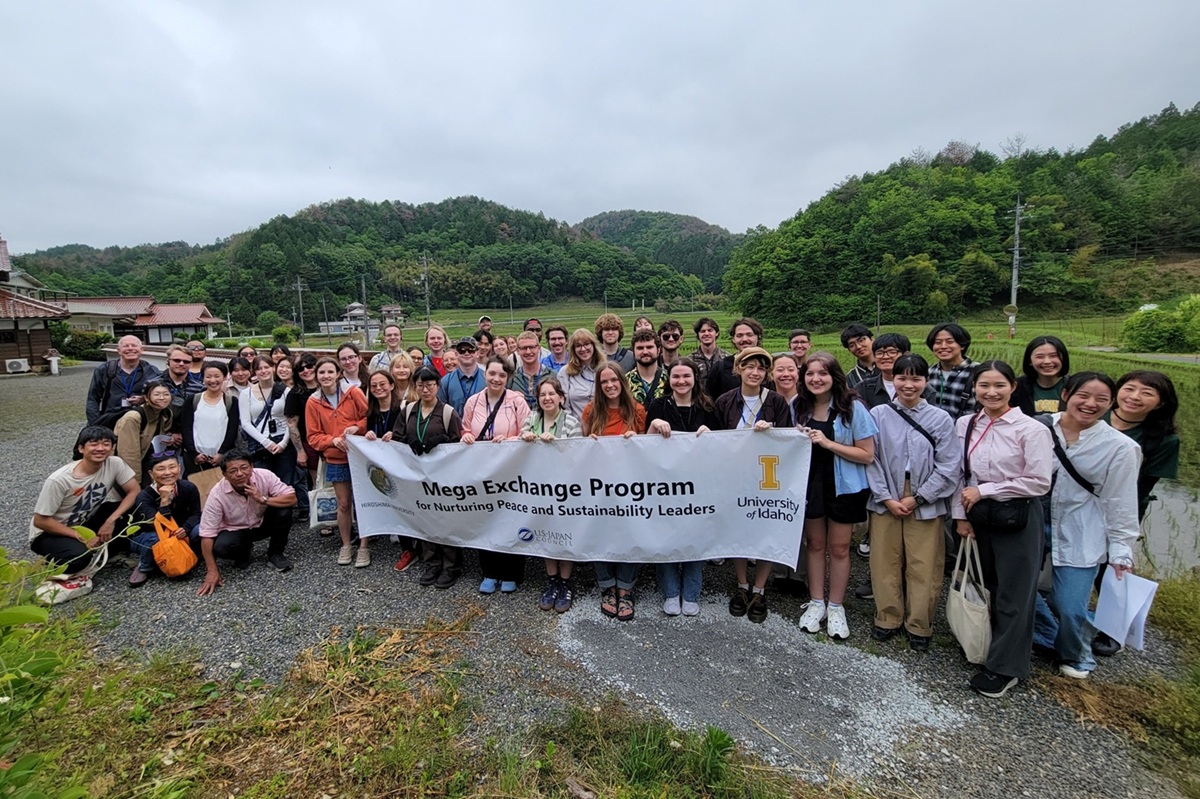
Hiroshima University, in collaboration with the University of Idaho (USA), conducted a program from May 19 to 29, 2026, as part of the “Mega Exchange Program for Nurturing Peace and Sustainability Leaders.” Participants explored the themes of peace and sustainability through multifaceted learning grounded in Hiroshima’s historical context and local resources. |
|
|
Discover HU’s Excellence! |
|
|
On June 24, 2026, Times Higher Education, a UK-based higher education magazine, announced the “THE Sustainability Impact Ratings 2026” (formerly known as the Impact Rankings). This ranking visualizes universities’ contributions to society using the framework of the United Nations’ Sustainable Development Goals (SDGs).
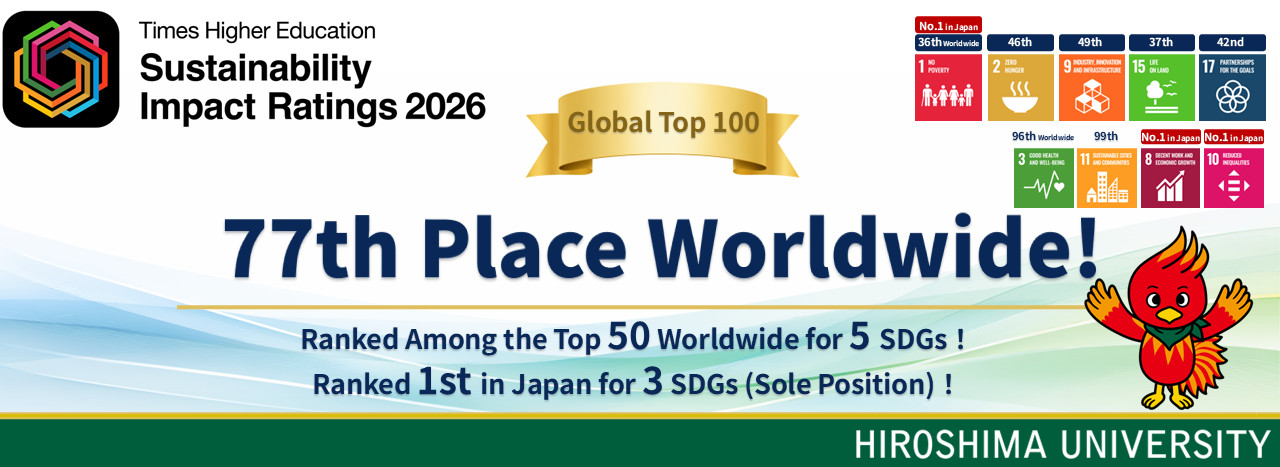
Hiroshima University was ranked 77th globally (out of 1,603 institutions) and 2nd in Japan (out of 30 institutions) in the overall rankings. This is the first time the University has been ranked among the global top 100.
While Hiroshima University has consistently ranked within the 101-200 range for the past six years, its steady and dedicated efforts have culminated in making it to the world’s top 100 this year. This achievement has realized the university’s long-standing goal of ranking among the global top 100.
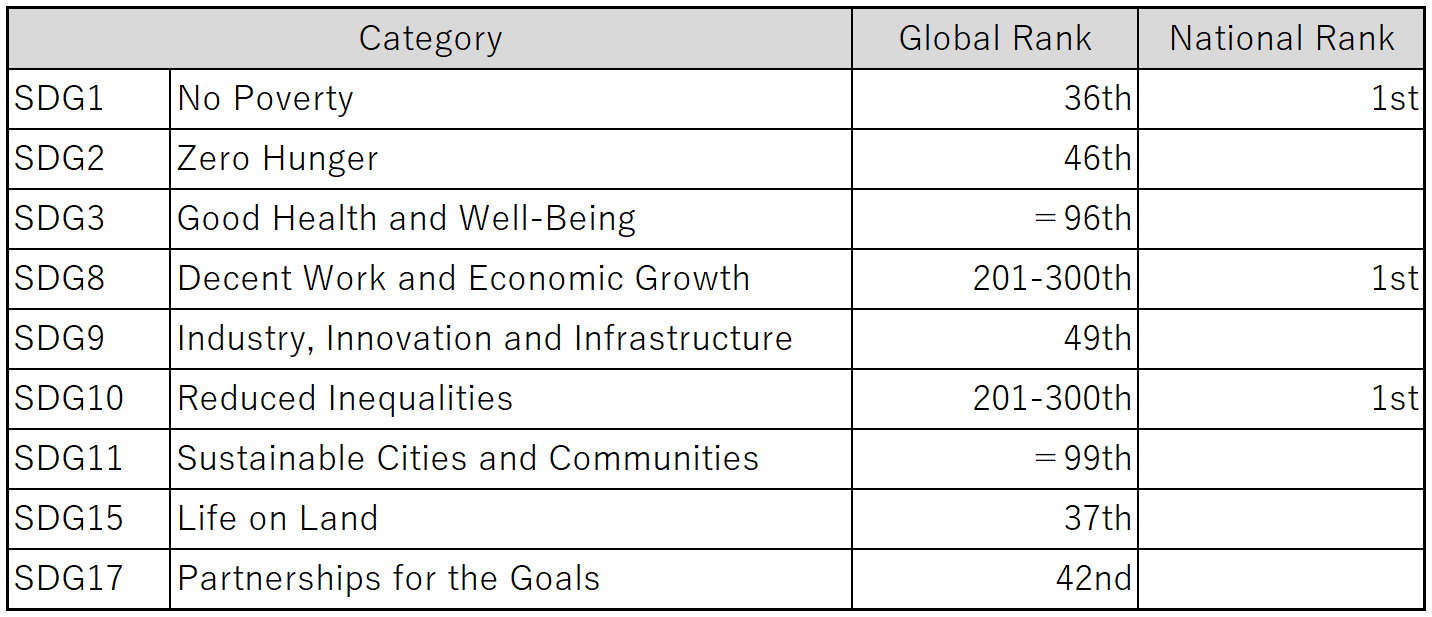
In the SDGs rankings, Hiroshima University ranked among the global top 100 in seven SDG categories, tying for the highest number among Japanese universities. Of these, five ranked within the global top 50. In addition, the university achieved sole first place in Japan in three categories. The relevant SDG categories are as follows: |
|
|
We believe that these achievements are the result of Hiroshima University’s steady contributions to the global community toward the attainment of the SDGs by 2030, including its Carbon Neutral × Smart Campus 5.0 initiatives. In particular, we believe that the University’s recent efforts to actively promote these initiatives and share their outcomes and insights with society have contributed to this recognition. |
|
|
Key Factors Behind Hiroshima University's Ranking
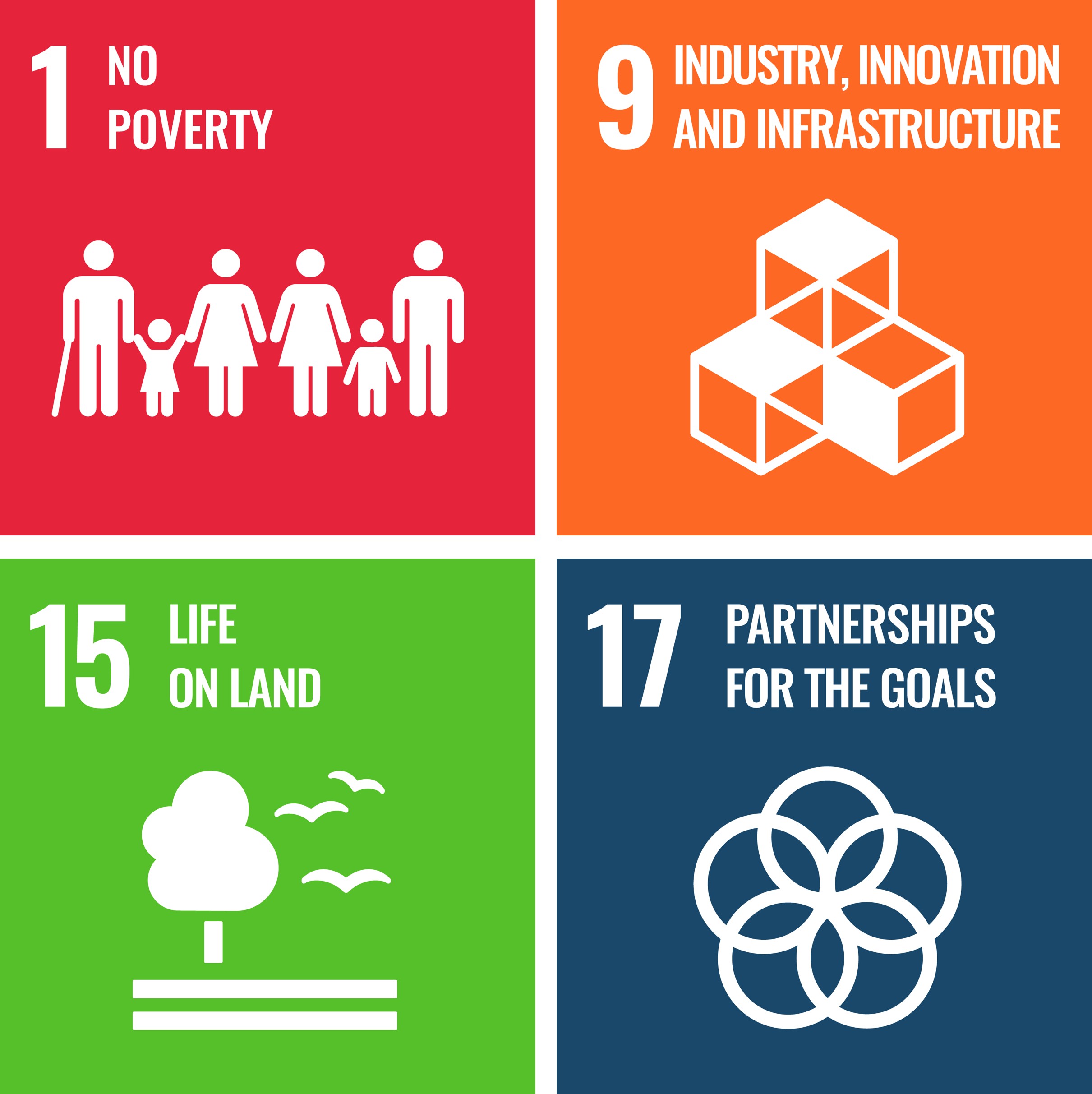
The overall ranking is calculated based on a combination of the score for SDG 17 (Partnerships for the Goals), which is mandatory for all participating institutions, and the scores of the institution's top three-performing SDGs selected from SDG 1 to SDG 16. For Hiroshima University, the overall score was calculated using the mandatory SDG 17 (Partnerships for the Goals), together with SDG 1 (No Poverty), SDG 9 (Industry, Innovation and Infrastructure), and SDG 15 (Life on Land). |
|
|
In particular, SDG 15 (Life on Land) reflects the University's strong commitment to biodiversity conservation, including initiatives recognized under Japan's Ministry of the Environment's Nationally Certified Sustainably Managed Natural Sites program and the activities of the University Museum, which marks its 20th anniversary this November. The score for research related to SDG 15 also increased, demonstrating that Hiroshima University's efforts toward achieving the SDGs are recognized in both practice and research.
The following sections highlight Hiroshima University's initiatives related to each SDG category.
|
|
|
1. Hiroshima University's Initiatives Related to SDG 1: No Poverty
Hiroshima University contributes to poverty reduction efforts at the local, regional, national, and global levels through collaborative research, policy recommendations, and capacity-building initiatives.
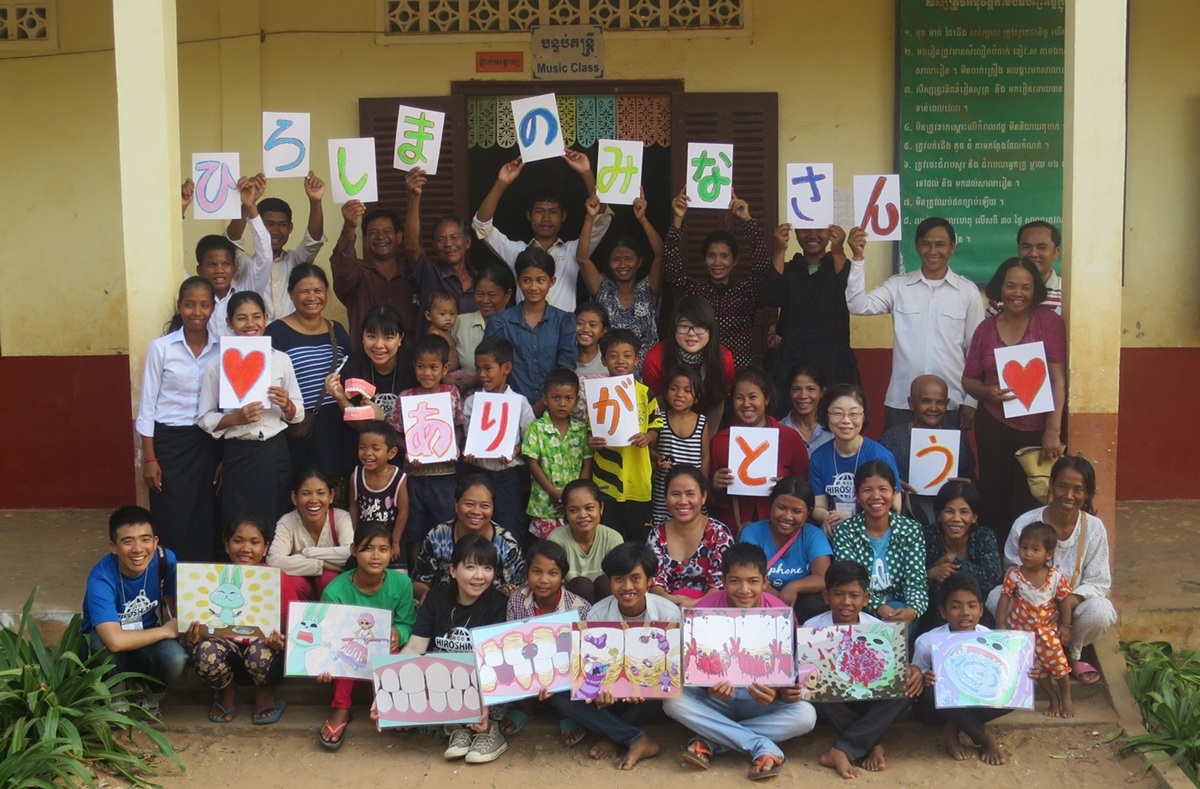
Since 2009, the Department of Pediatric Dentistry, Graduate School of Biomedical and Health Sciences has supported dental healthcare support activities in Cambodia. Cambodia continues to face challenges in the provision of dental care, oral health services, and the training of dental professionals due to the collapse of its education and healthcare systems in the late 1970s following years of civil conflict, during which many educators, physicians, and dentists lost their lives.
Hiroshima University's School of Dentistry works closely with the non-profit organization (NPO) NGO Hiroshima "Association for Protecting Asian Children's Teeth" and local partner institutions in Cambodia to address these challenges. The Department of Pediatric Dentistry plays a leading role in planning, coordinating, and implementing these activities. |
|
|
Dental healthcare support activities in Cambodia |
|
|
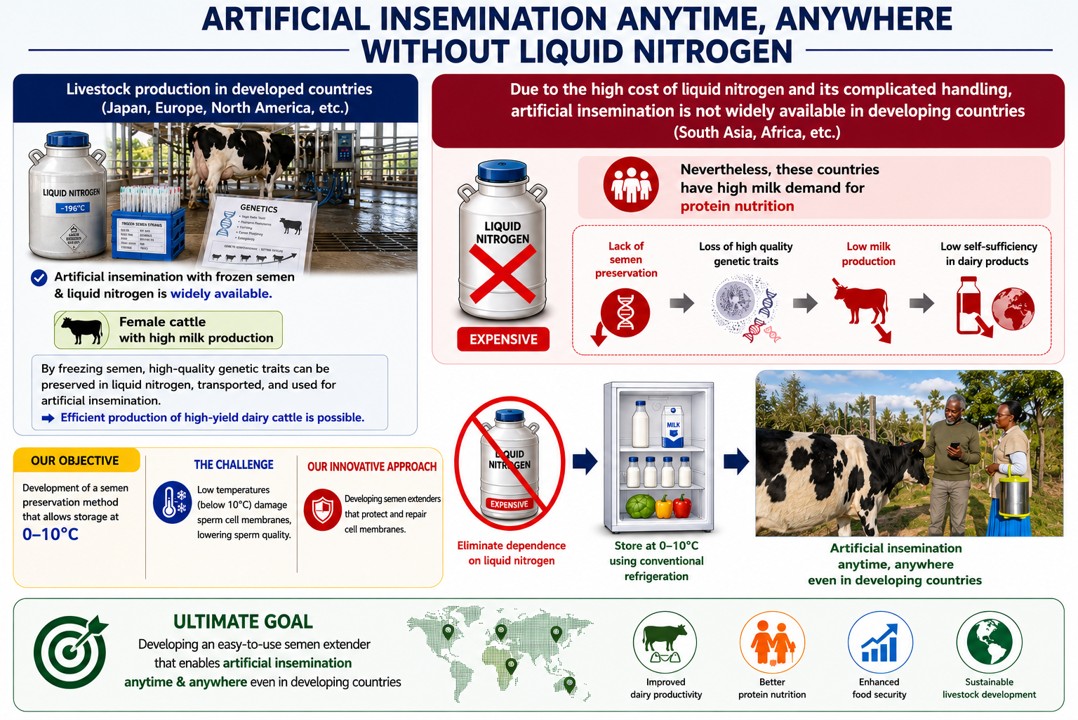
In 2019, a research group led by Professor Masayuki Shimada of the Graduate School of Integrated Sciences for Life developed an artificial insemination technique for cattle based on a simplified and low-cost sex selection method.
In the following year, the group received approximately US$2.7 million in funding from the Gates Foundation over a three-year period to support research aimed at addressing food insecurity among low-income communities in India. Through this project, the team successfully developed a practical technology to increase the number of female calves and boost milk production by expanding dairy herds.
However, expanding the technology’s use globally requires an affordable and reliable semen preservation method that maintains sperm quality during transportation and storage. In 2025, the group received an additional grant of approximately US$1.8 million from the Gates Foundation and launched a new three-year research project beginning in October. Working in collaboration with agricultural organizations and government research institutes in India, the project aims to create an environment in which smallholder dairy farmers in India and Africa can gain access to highly productive and adaptable cattle and water buffalo. Ultimately, the initiative seeks to improve farmers' incomes and livelihoods while contributing to food security in local communities by making sexed semen and artificial insemination available anytime and anywhere, even in regions where liquid nitrogen is unavailable. |
|
|
2. Hiroshima University's Initiatives Related to SDG 9: Industry, Innovation and Infrastructure
We believe that this recognition reflects not only the increase in research funding received from industry, but also the growing number of university start-ups established based on the University's research outcomes. These achievements demonstrate Hiroshima University's commitment to translating its research excellence into societal value through industry-academia collaboration and contributing to the creation of new industries and innovations. |
|
|
3. Hiroshima University's Initiatives Related to SDG 15: Life on Land
Hiroshima University has continuously promoted initiatives to conserve and enhance biodiversity on its Higashi-Hiroshima Campus.
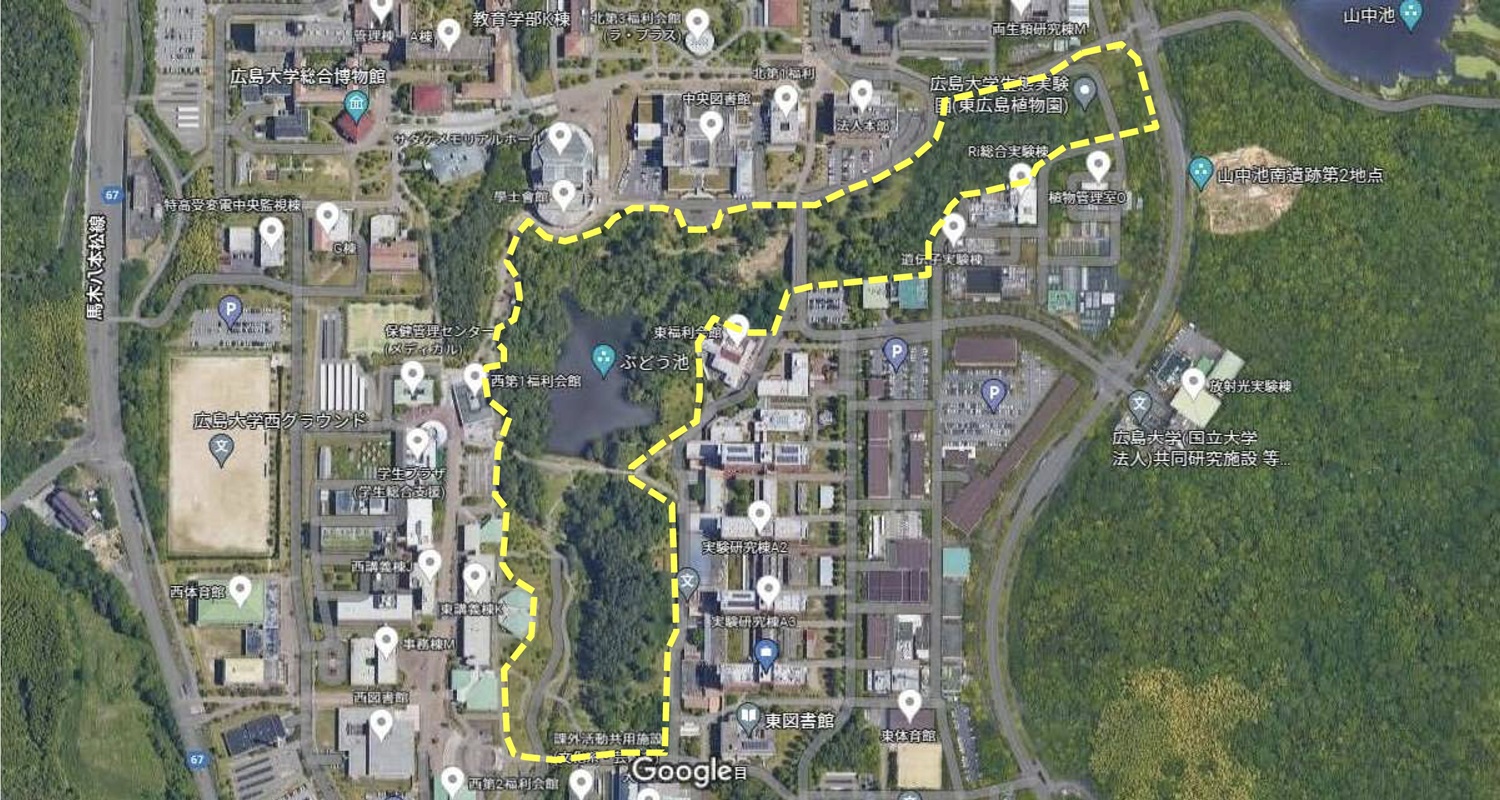
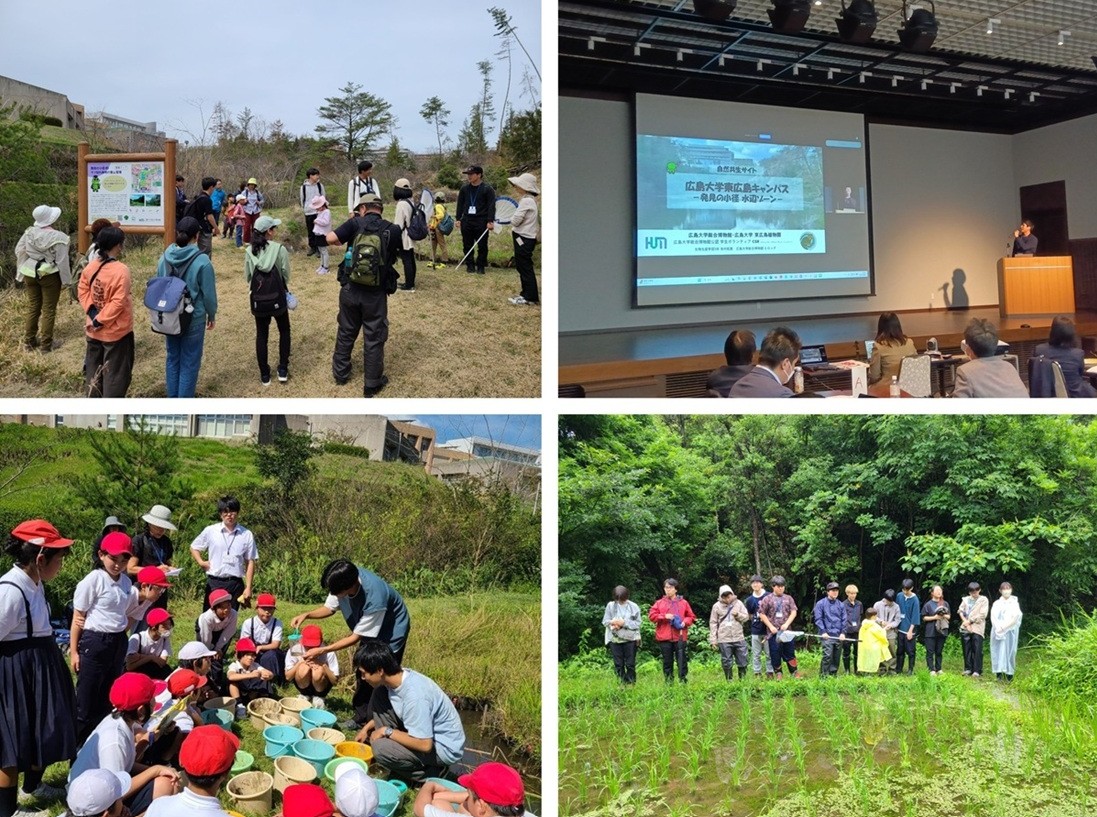
The “Discovery Trail – Waterside Zone” on the Hiroshima University's Higashi-Hiroshima Campus has been certified as a Nationally Certified Sustainably Managed Natural Site by Japan's Ministry of the Environment. This certification is awarded to areas where biodiversity is being effectively conserved through initiatives led by private organizations and other stakeholders. The program aims to promote the maintenance and enhancement of biodiversity and contribute to Japan's 30 by 30 target, which seeks to effectively conserve at least 30 percent of the country's land and marine areas as healthy ecosystems by 2030.
This recognition reflects the long-standing efforts of staff members of the Hiroshima University Museum and the Higashi-Hiroshima Botanical Garden, who have conducted biodiversity surveys on the Campus for many years. It also acknowledges the valuable contributions of local residents and the Museum's certified student volunteer group, the Campus Student Rangers (CSR).
Within the certified area, a total of 53 rare species of insects, plants, birds, and other organisms listed in the Red Data Books of the Ministry of the Environment and Hiroshima Prefecture have been recorded. In addition, annual breeding of the Japanese brown frog Rana japonica, a species listed in the Hiroshima Prefecture Red Data Book, has been consistently confirmed within the area. |
|
|
Sustainably Managed Natural Sites Area (area outlined in yellow) |
|
|
4. Hiroshima University's Initiatives Related to SDG 17: Partnerships for the Goals
In this category, universities are evaluated on their overall activities toward achieving the SDGs, including collaboration with other institutions, the publication of SDGs reports, and education related to the SDGs.
Hiroshima University's performance in this category is considered to reflect its broad and integrated approach to promoting the SDGs. Key initiatives include the NERPS Conference hosted by the Network for Education and Research on Peace and Sustainability (NERPS), the University's hub for SDG-related activities, as well as common graduate courses and a variety of public lectures and events focused on sustainability and the SDGs.
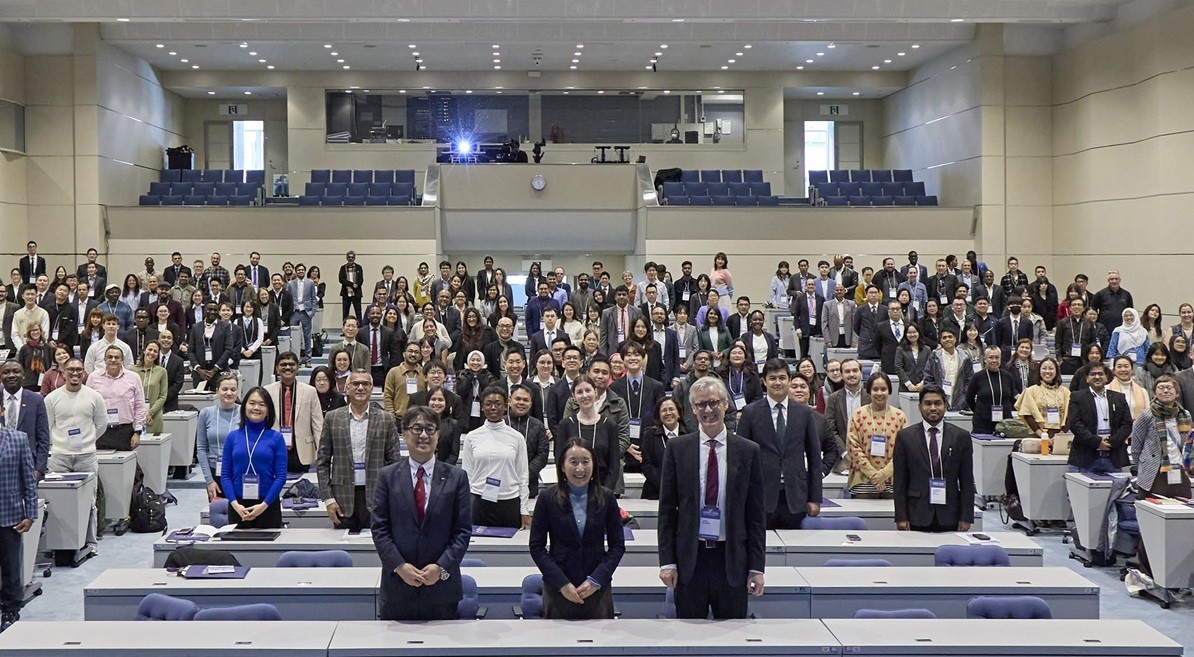
NERPS at Hiroshima University has hosted the NERPS Conference every year since 2022. The conference offers a platform for students, researchers, and practitioners to exchange ideas, present their work, and forge partnerships for transdisciplinary research and collaborative action toward peaceful and sustainable futures. It features research presentations, expert roundtables, innovative workshops, and an optional excursion.
The NERPS 2026 Conference in Tokyo, which NERPS and the United Nations University (UNU) jointly hosted in March 2026 at the UNU Headquarters in Tokyo, brought together 322 researchers, practitioners, and students from 152 universities, research institutes, and NGOs across 37 countries. The conference featured 63 sessions (including eight organized sessions, two roundtables, and one workshop), 242 in-person and online oral presentations, and 22 poster presentations, facilitating exchanges of information and views as well as networking on initiatives toward the realization of a peaceful and sustainable society. |
|
|
Looking Ahead
Hiroshima University has pursued its mission of advancing "Science for Sustainable Development (now being disseminated as a new philosophy for Peace Science)" and has cultivated "peace-pursuing, cultured individuals with an international mindset and a challenging spirit," thereby contributing to the realization of a free, peaceful international society that fosters diversity.
Moving forward, toward the achievement of the SDGs by 2030 and the realization of an even more peaceful and sustainable world beyond, Hiroshima University will continue to build on its efforts while aiming to increase the visibility of its contributions to the world.
|
|
|
The next issue will be sent on July 22. |
|
|
* This email is sent from a non-reply email address. Please note that any replies to this address will not be monitored or answered. * Unauthorized reproduction or redistribution of any part or all of this email is prohibited. |
|
|
■Edited and Published by Hiroshima University Email Newsletter Operations Project 1-3-2 Kagamiyama, Higashi-Hiroshima City, 739-8511, Japan E-mail: u-st-project@office.hiroshima-u.ac.jp
To change your registered email address, please first unsubscribe the currently registered email address, and then register your new email address here. |
|
|
|
|