Thank you for reading the Hiroshima University Email Newsletter. We’re excited to share the latest stories, research breakthroughs, and campus updates with you. |
|
|
1. Hiroshima University Ranks Among Top 10 in Japan in THE Asia University Rankings 2026 |
|
|
On April 23, 2026, Times Higher Education, a UK-based higher education magazine, released the THE Asia University Rankings 2026. Hiroshima University was ranked 154th (tied) in Asia and 10th in Japan.
The rankings are based on five performance indicators: Teaching, Research Environment, Research Quality, Industry, and International Outlook. Hiroshima University’s overall score increased by two points from the 2025 rankings. Among Japanese universities ranked within the top 200, Hiroshima University recorded the largest increase in score for the second consecutive year.
The improvement in the overall score was driven primarily by gains in the areas of Research Quality. In particular, an increase in the number of publications within the top 10% over the past five years contributed to the higher evaluation. |
|
|
In another major recognition from the Times Higher Education, Hiroshima University was also named the only Japanese finalist in THE Awards Asia 2026. The University was shortlisted in five of the ten categories for which it submitted entries. Although the University did not secure a consecutive award following last year’s success, it was the only university in Japan to be selected as a finalist this year, demonstrating that its initiatives continue to receive international recognition. |
|
|
2. Applications Now Open for the Hiroshima University Global Doctoral Fellowship Program (Support Starting October 2026) |
|
|
Hiroshima University has established the Hiroshima University Global Doctoral Fellowship to support international doctoral students by providing an environment where they can focus on their research and by fostering their growth so that they can contribute to Japan’s future in science, technology, and innovation and become global leaders. Selected students will be employed as research fellows and provided with a salary and research funding.
Applications are currently being accepted from students planning to enroll in a doctoral course or four-year doctoral program at Hiroshima University in October 2026. |
|
|
3. Hiroshima University Opens “Science Knot” Collaboration Hub with Student Career Space “Shiru Café” |
|
|
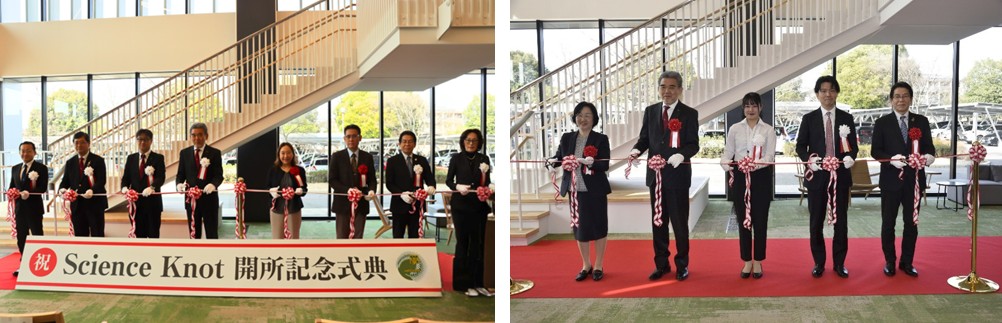
On March 27, Hiroshima University held an opening ceremony for Science Knot, a new hub for industry-academia collaboration and home to the International Institute for Sustainability with Knotted Chiral Meta Matter (WPI-SKCM²). An opening ceremony was also held for SHIRU CAFE, a student career support center located within the building.
The facility is a six-story research building with a total floor area of approximately 6,000 square meters. It was developed under the Ministry of Education, Culture, Sports, Science and Technology’s (MEXT) facility development program for regional core research universities, in coordination with WPI-SKCM², a center selected for MEXT’s World Premier International Research Center Initiative (WPI). The facility is designed to accelerate the full process from basic research to interdisciplinary research and ultimately to social implementation. |
|
|
About WPI
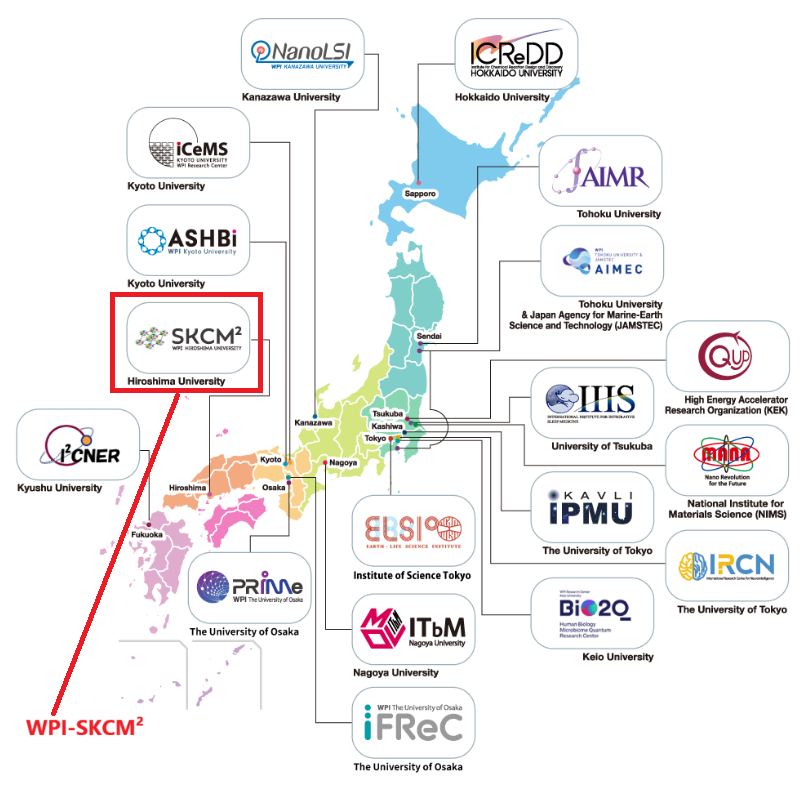
The WPI is a program to establish “globally visible” research centers that boast a very high research standard and outstanding research environment. A total of 18 centers have been selected nationwide, and approximately 7 billion yen will be allocated over a 10-year period through AY2031. |
|
|
Distribution of WPI Centers Across Japan Source: WPI Program Website, Japan Society for the Promotion of Science (JSPS) Red box and text added by Hiroshima University |
|
|
High-impact Research from Top-tier Journals |
|
|
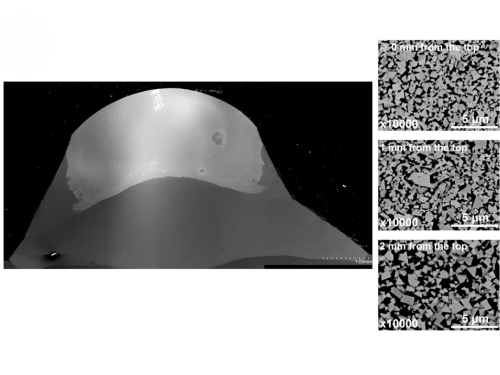
Researchers Find a Way to 3D Print One of Industry’s Hardest Engineering Materials
The approach uses 3D printing to produce WC–Co cemented carbides-ultra-hard materials used in cutting and construction tools-while reducing the waste and cost of conventional manufacturing. |
|
|
Discover HU’s Excellence! |
|
|
How a Fridge Could Unlock Modern Dairy Cattle Breeding in the Developing World |
|
|
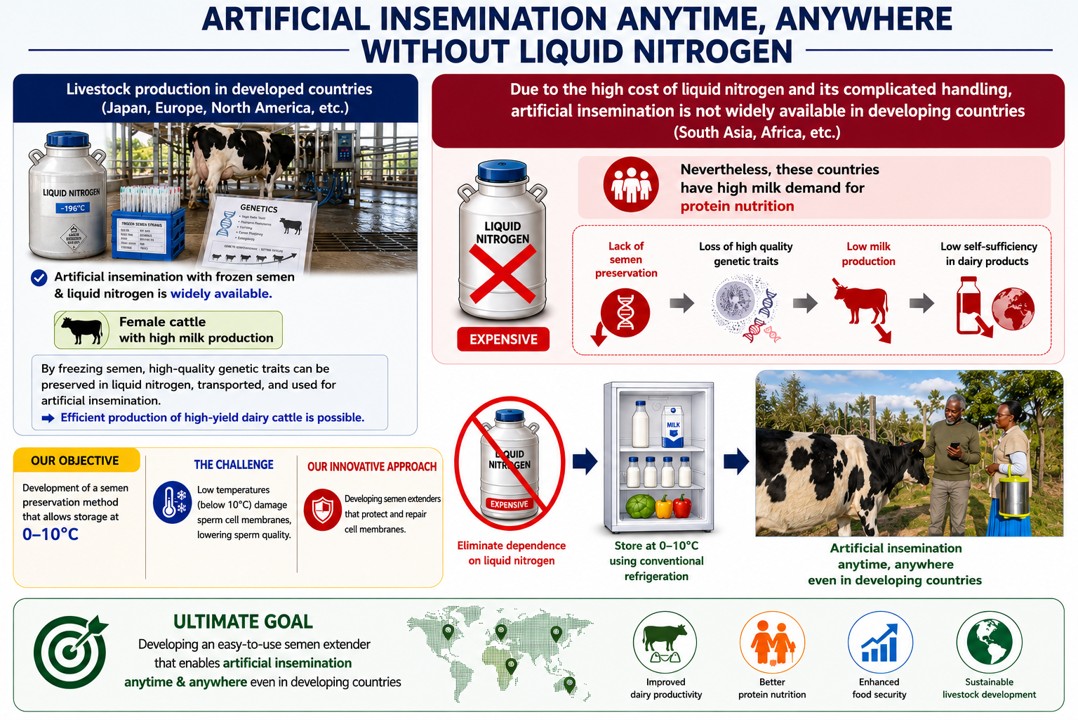
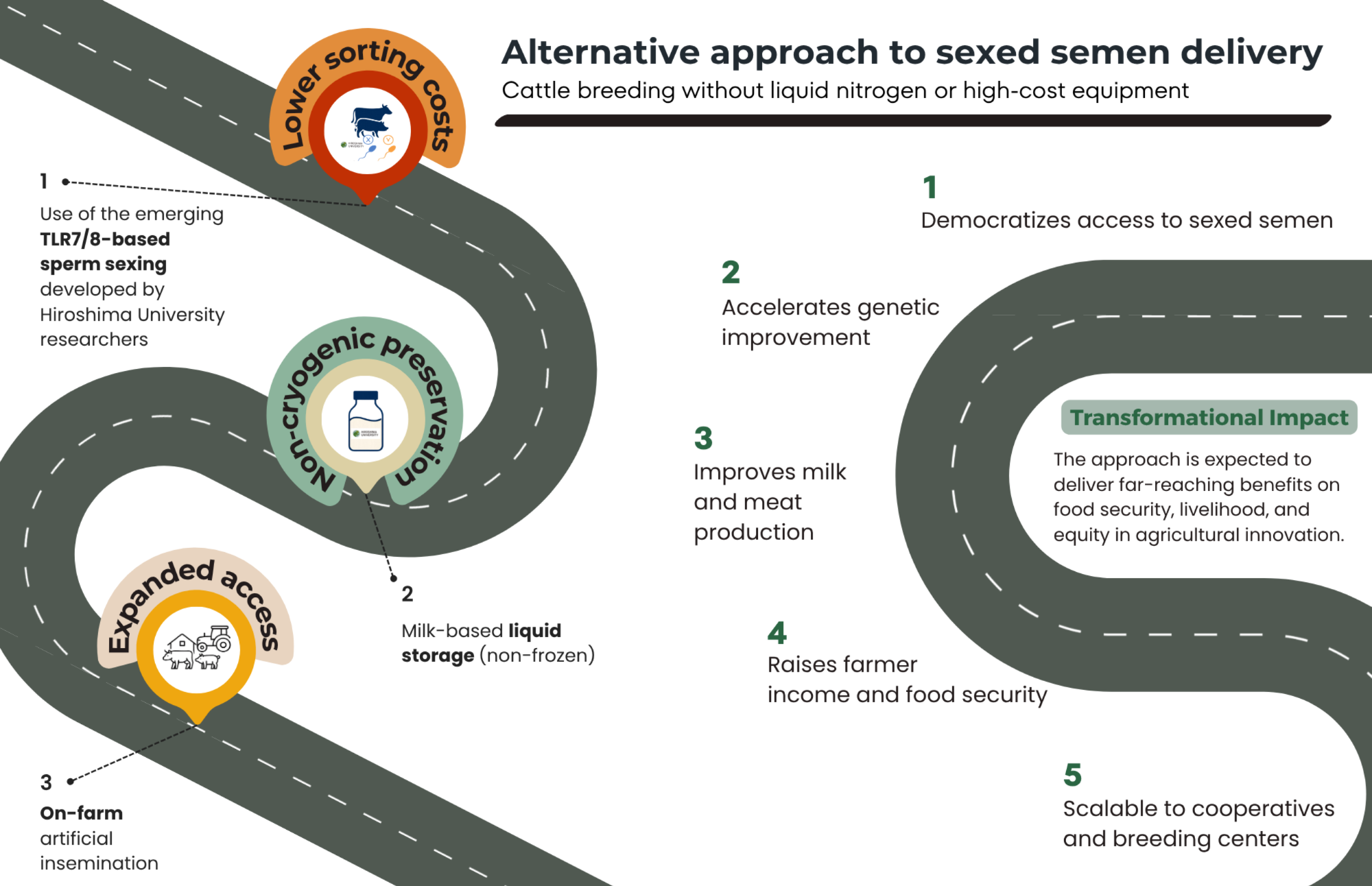
A Hiroshima University-led project has secured a $1.8 million grant from the Gates Foundation to develop a way to store bull semen using simple refrigeration instead of costly liquid nitrogen, a shift that could remove a major barrier to modern dairy cattle breeding that has long excluded farmers in low-resource regions. If successful, the technology is expected to deliver far-reaching benefits on food security and livelihoods in local communities.
The project, headed by Professor Masayuki Shimada, received the grant in October 2025, marking the second time his laboratory has secured funding from the foundation. |
|
|
From a previous article: Hiroshima University scientists behind new sex selection method get $2.7M grant to help India’s smallholder farmers grow dairy herds
Building on their 2019 discovery that identified functional differences between X-bearing (female-producing) and Y-bearing (male-producing) sperm, the team developed a simplified and low-cost sex selection technique that would help farmers reliably produce more female calves. The deployment of this technique has already begun at dairy farming sites in India, where it has attracted attention for its ease of use, even by small-scale farmers.
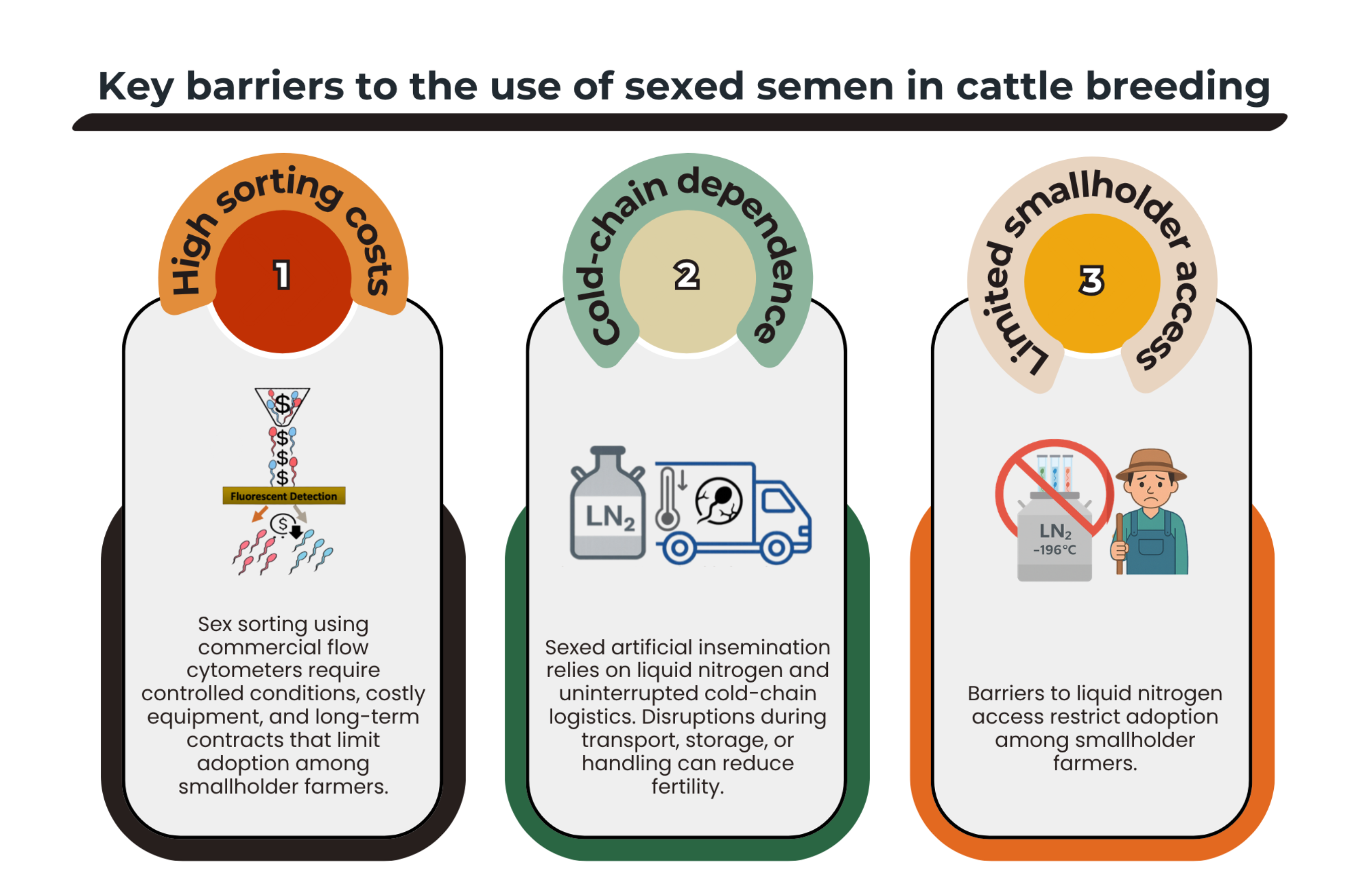
However, expanding the technology’s use globally requires a safe method of transporting and storing the processed sperm. In many countries, liquid nitrogen is used for cryopreservation. But in the developing world, a stable supply of liquid nitrogen cannot be guaranteed, creating a major barrier to adoption. |
|
|
Under the new grant, the team will develop a storage method that allows bovine sperm to be stored at about 5 °C, roughly the temperature of a household refrigerator, eliminating the need for liquid nitrogen. The work builds directly on the group’s previous research clarifying how sperm move, how they generate energy, and how low temperatures cause cellular damage. If preservation and transport become possible at refrigerator temperatures, artificial insemination could become far easier to use. |
|
|
In connection with this achievement, a press briefing was held in Tokyo in November 2025. A video recording of the briefing has been released as part of this press release report. We invite you to view it. |
|
|
The next issue will be sent on June 25. |
|
|
* This email is sent from a non-reply email address. Please note that any replies to this address will not be monitored or answered. * Unauthorized reproduction or redistribution of any part or all of this email is prohibited. |
|
|
|
|